
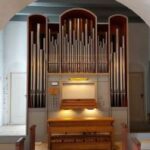
Ulsted Church
24. October 2024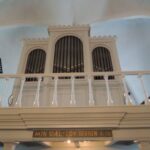
Hornslet Church
19. March 2025The organ was built by P. Bruhn & Son in 1979; with partial reuse of pipes from the church's previous organ (built 1929 by Th. Frobenius & Co. with reutilisation of Knud Olsen pipes from 1861, rebuilt in 1952 by the same); extended and rebuilt in 1996 by P.G. Andersen & Bruhn; the rückpositive is placed behind an older organ facade (Knud Olsen 1861).
In 2024, the following alterations and restoration work was carried out:
The façade pipes of the main organ were renewed, including double choruses made sounding. The rückpositive's façade pipes have been renewed. Pedal Principal 16' C-H have been reworked, and the wind supply has been improved. Pedal Principal 8' has been renewed. Basun 16' is connected to independent pallet boxes, which replace long conduits.
Various pipes have been refurbished in terms of sealing of pipes and renovation of soldering etc.
Leather coatings on the bellows have been renewed. The organ has been cleaned and various access doors in the organ cabinet have been inspected and modified.


The existing mechanical console has been refurbished and regulated, and various action rollers have been renewed, all with a view to easier and more precise operation. The stopboards have been renewed and reorganised, with the reuse of draw stops and magnets.
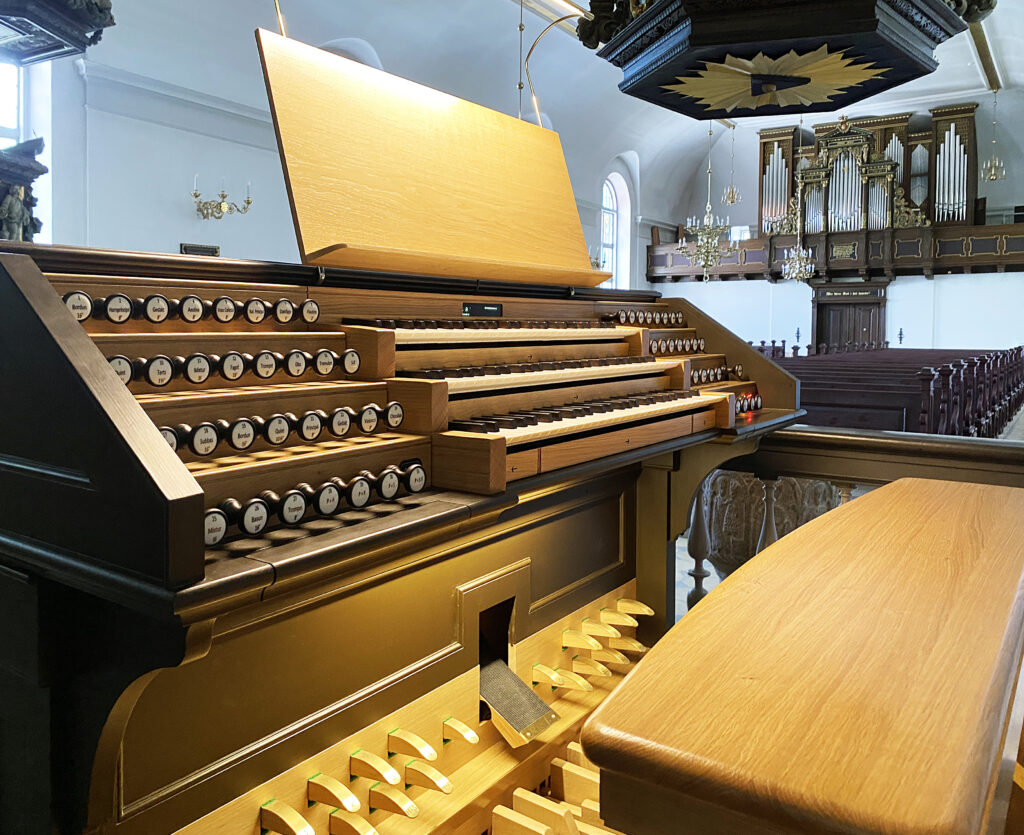
The organ's playing mechanism, which was mechanical except for the swell couplers, has been supplemented with electrical switches (Espressivo) and magnets so that all playing and stop functions are transferred to a new, mobile console located in the church choir. The setzer system has been renewed (Sinua brand). The swell shutters are fitted with an electric motor.
Organ consultant Per Rasmus Møller's assessment of the finished result includes:
"The sound of the organ is very coherent, which is especially noticeable at the mobile console. The organ has a wide dynamic range, from the barely audible Æoline 8‘ in closed swell to the tutti sound, which has an impressive power and width, not least due to the imposing Basun 16’ in the pedal. The mobile console is extremely beautiful and tasteful. The action from the swell pedal to the swell mechanism, which by its very nature must be electric (as it is from the main console), works very precisely. Crescendos and diminuendos can actually be performed more smoothly than with a traditional mechanical swell function. When it comes to the playing action, you don't realise that it's electric. On the contrary, the way you play seems natural, with the key “breaking point” giving the player a clear illusion of mechanical action.

Technical specifications
I. manual
Rückpositiv:
Principal 8'
Trægedakt 8'
Fugara 4'
Rørfløjte 4'
Blokfløjte 2'
Quint 1 1/3'
Mixtur III
Vox Humana 8‘
Couplers: H+R, H+S (mechanical or electrical), R+S, S4’, H16’, P+H, P+R, P+S, P+S4’
Tremulants: R, S
Cymbelstjerne
II. manual
Great:
Gemshom 16'
Principal 8'
Rørfløjte 8'
Quintatøn 8'
Spidsfløjte 4'
Oktav 4'
Quint 2 2/3'
Gemshom 2'
Oktav 2'
Terz 1 3/5'
Mixtur V
Trompet 8‘
III. manual
Swell:
Bordun 16'
Hornprincipal 8'
Gedakt 8’
Aeoline 8'
Vox Celeste 8'
ltaliensk Principal 4'
Dækfløjte 4'
Quint 2 2/3'
Flautino 2'
Terz 1 3/5'
Mixtur IV
Fagot 16'
Trompet 8'
Obo 8'
Pedal
Principal 16'
Subbas 16'
Bordun 16' transmission from SV
Quint 10 2/3'
Principal 8'
Gedakt 8'
Violoncel 8'
Choralbas 4'
Mixtur III
Basun 16'
Trompet 8'

